
Samurai — What are you telling here?
Twenty short stories follow Mehdi’s life. Ellipses are part of the narrative: the book selects moments and arranges them into four movements.
Twenty short stories follow a life through four movements: holding oneself together; serving and losing oneself; falling and receiving help; taking back control.
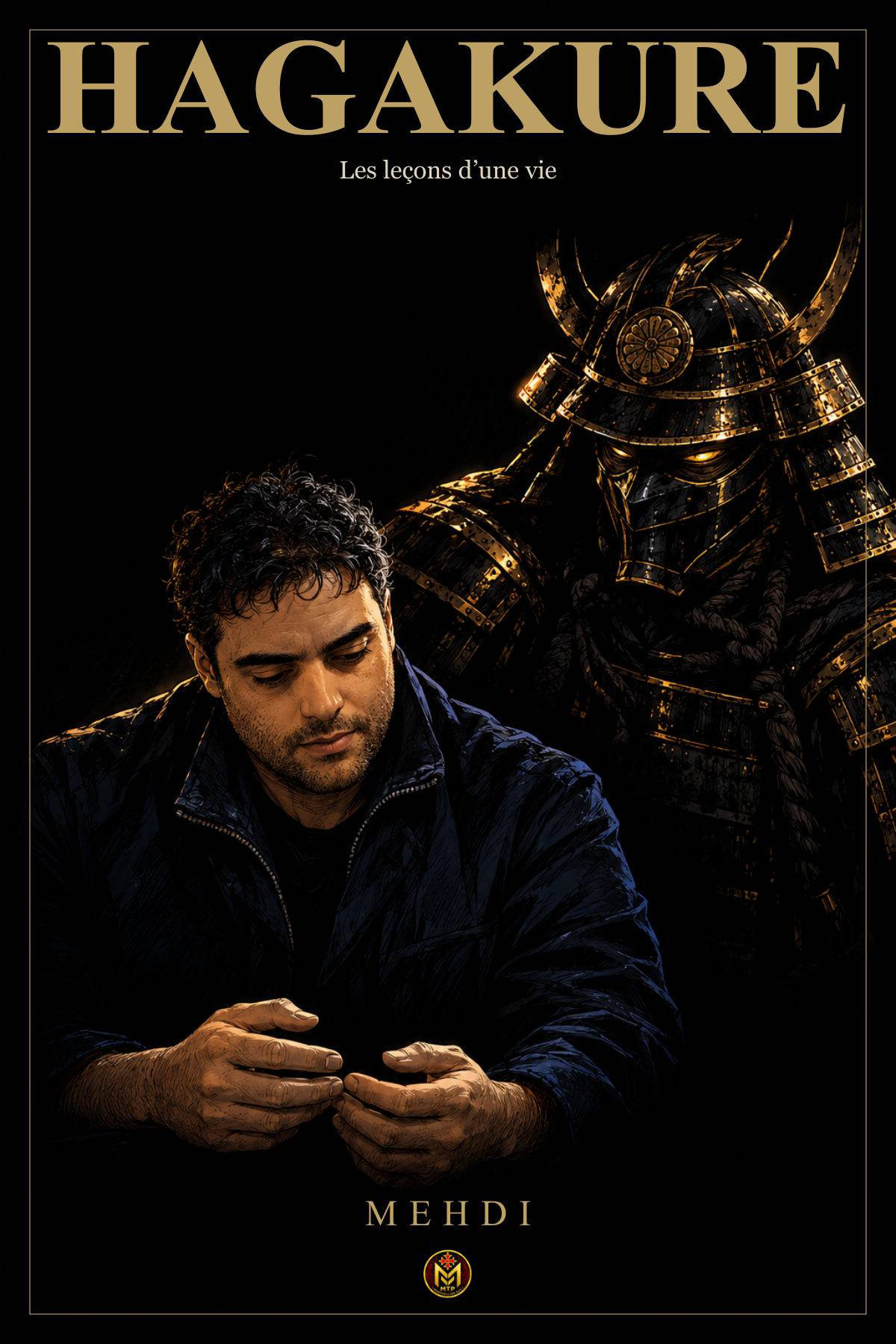
The full 97-page graphic novel is available in the original French edition. The reader offers PC and tablet layouts, page navigation and zoom.
Read the French edition →Fictional interview: these answers reformulate the foreword and notes of the V2 edition. They are not words actually spoken by Mehdi or historical quotations from Hagakure. The Samurai is a symbolic figure.
Twenty short stories follow Mehdi’s life. Ellipses are part of the narrative: the book selects moments and arranges them into four movements.
You are a figure of symbolic confrontation. The exchanges were written for the comic; you are not a real encounter in the scenes of lived experience.
The book tests the thought of Hagakure against a life. Hunger imposed on someone does not become a virtue through the power of words alone.
They run through the acts of the story: repairing, lacking, receiving, helping, writing one’s sentence and walking. They are neither a certificate of recovery nor a definitive answer.
By distinguishing lived experience, narration and symbolic dialogue. The final notes describe sources and limits; the few quotations are identified as working translations or adaptations.