01
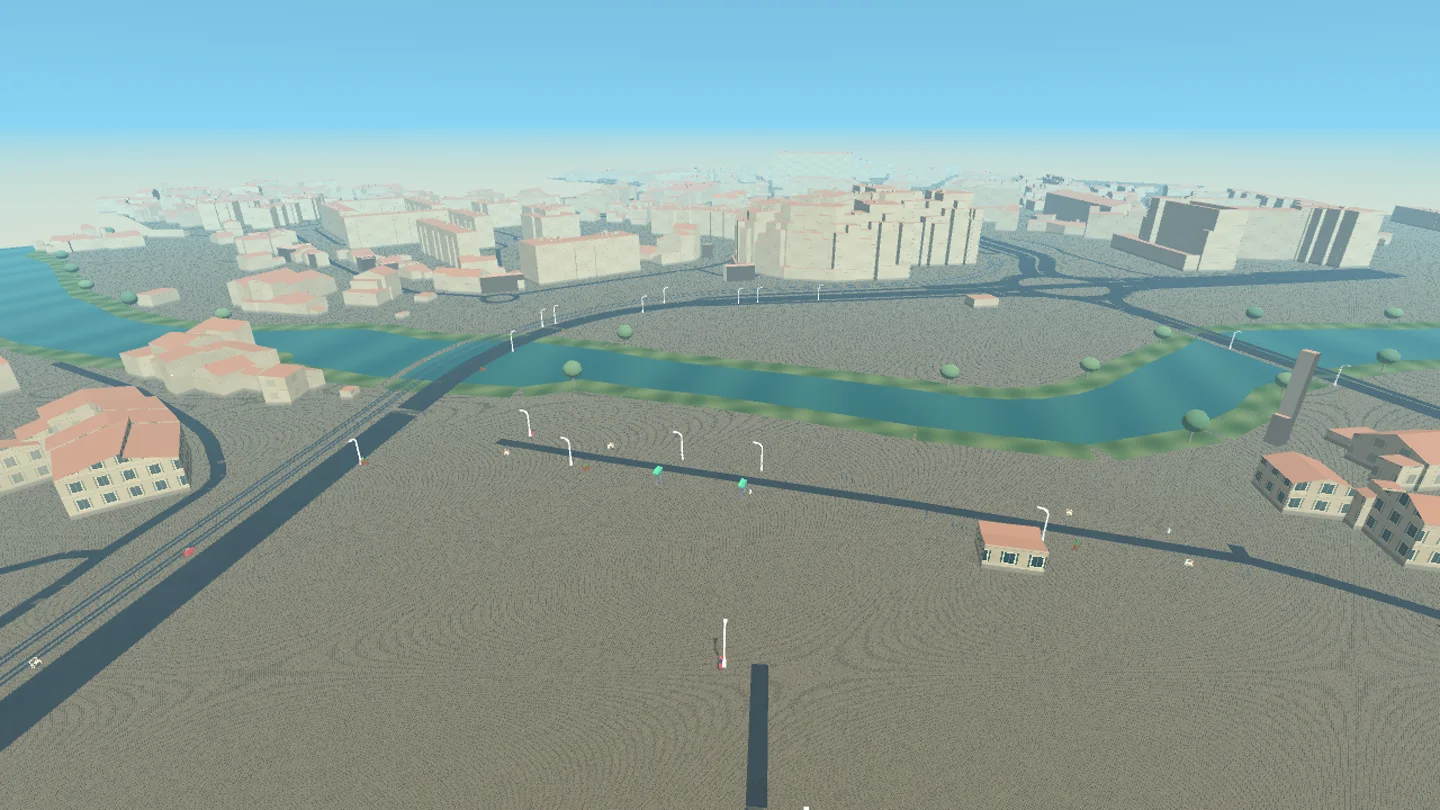
Clearer ground surfaces
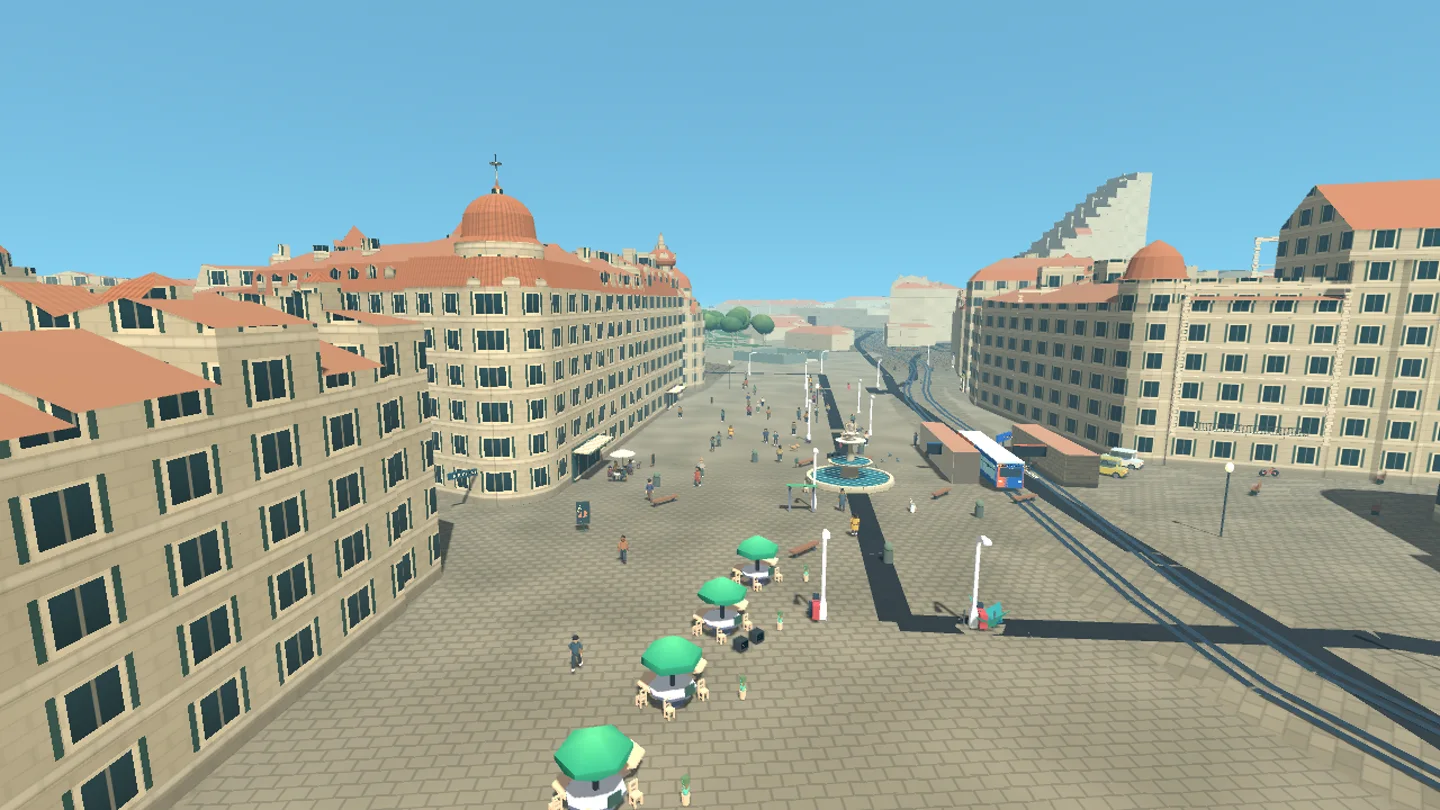
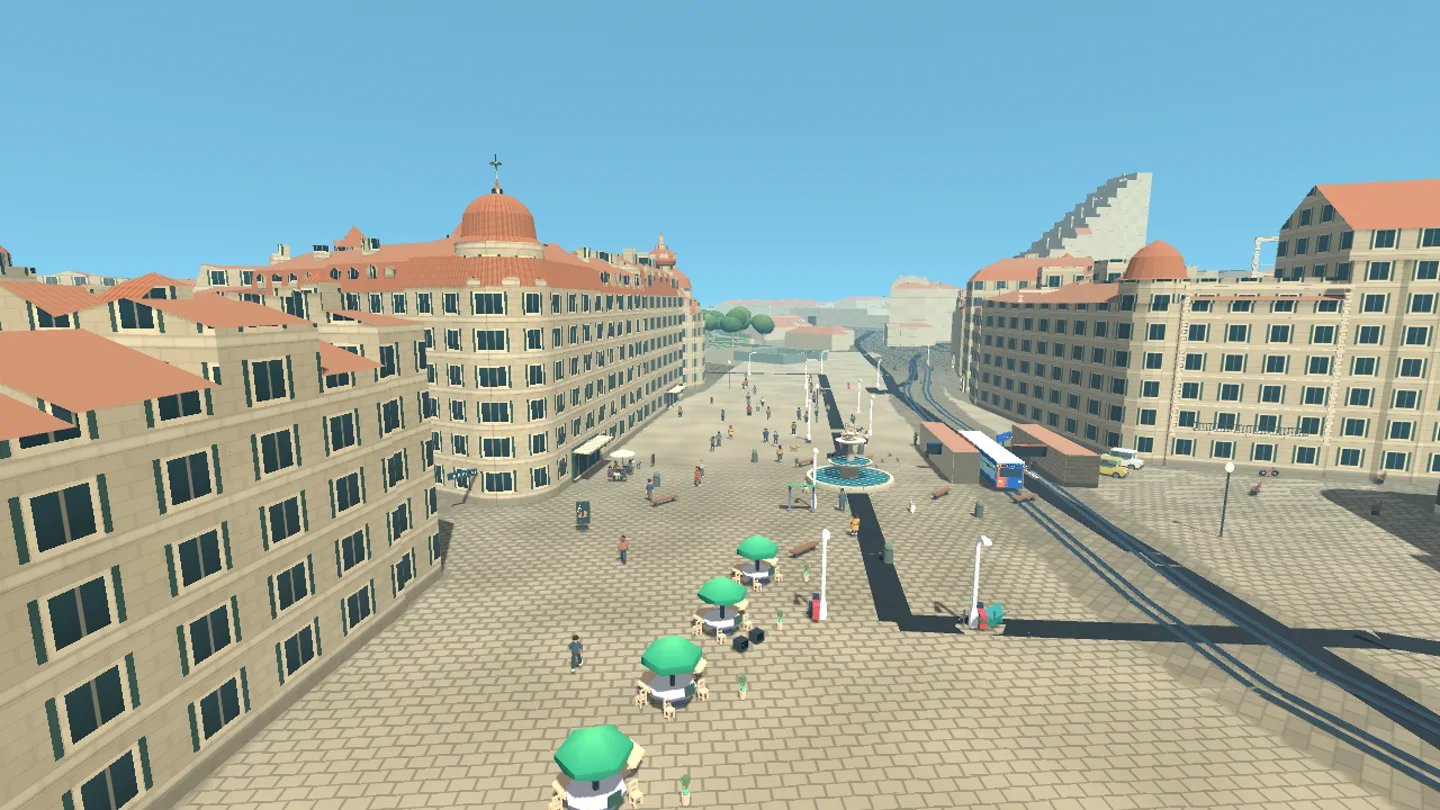
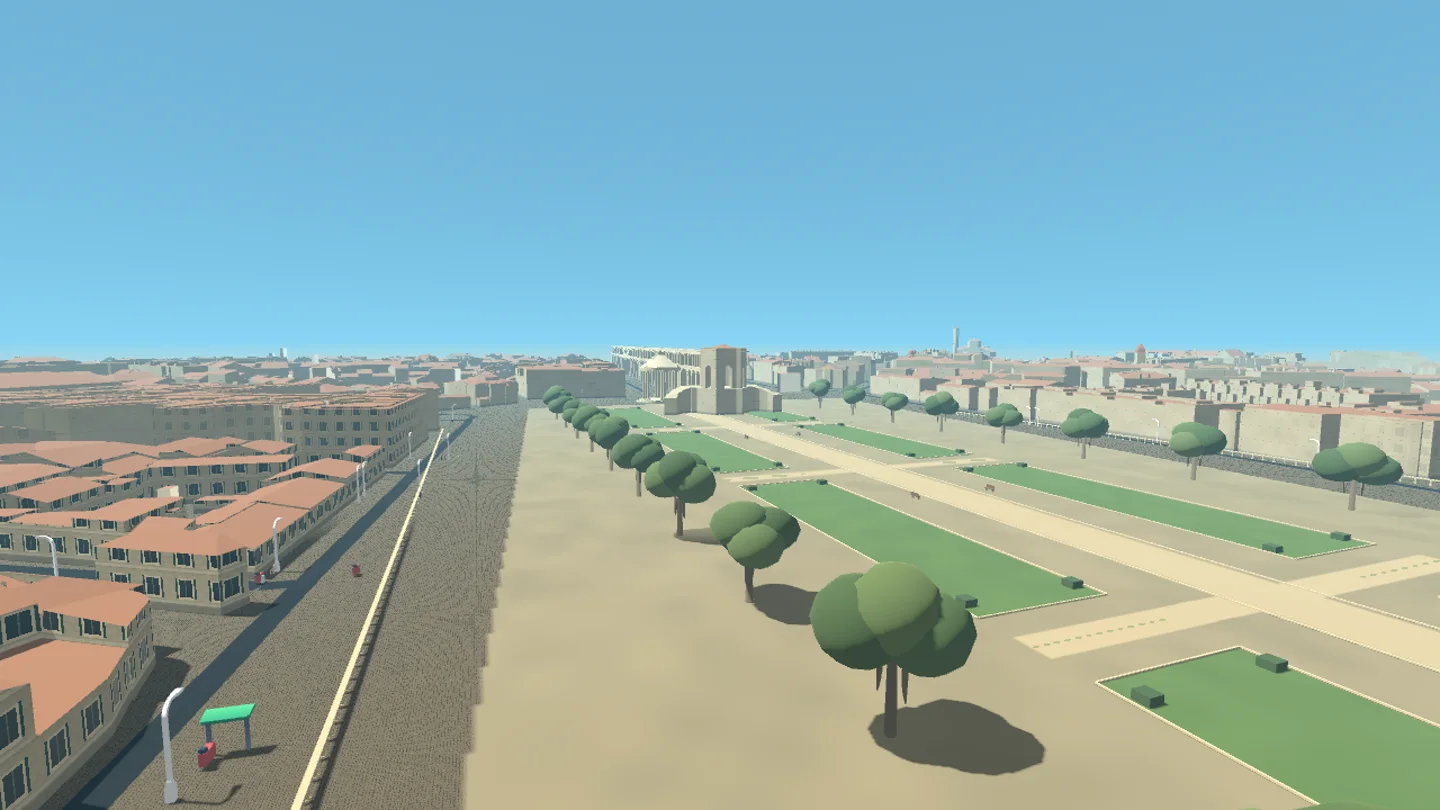
The stone has been lightened and distant paving softened. The shaders use coordinate derivatives to reduce fine details as the camera moves away, reducing pattern shimmer.
 MONTPELLIER ECUONE CITY · MANY PROJECTS · A SHARED FUTURE
PROJECT JOURNAL / 01
From the first prototype to the details that make a difference: images, technical choices and next steps for the Montpellier ECU ecosystem.
· Documented progress update
See the game's progress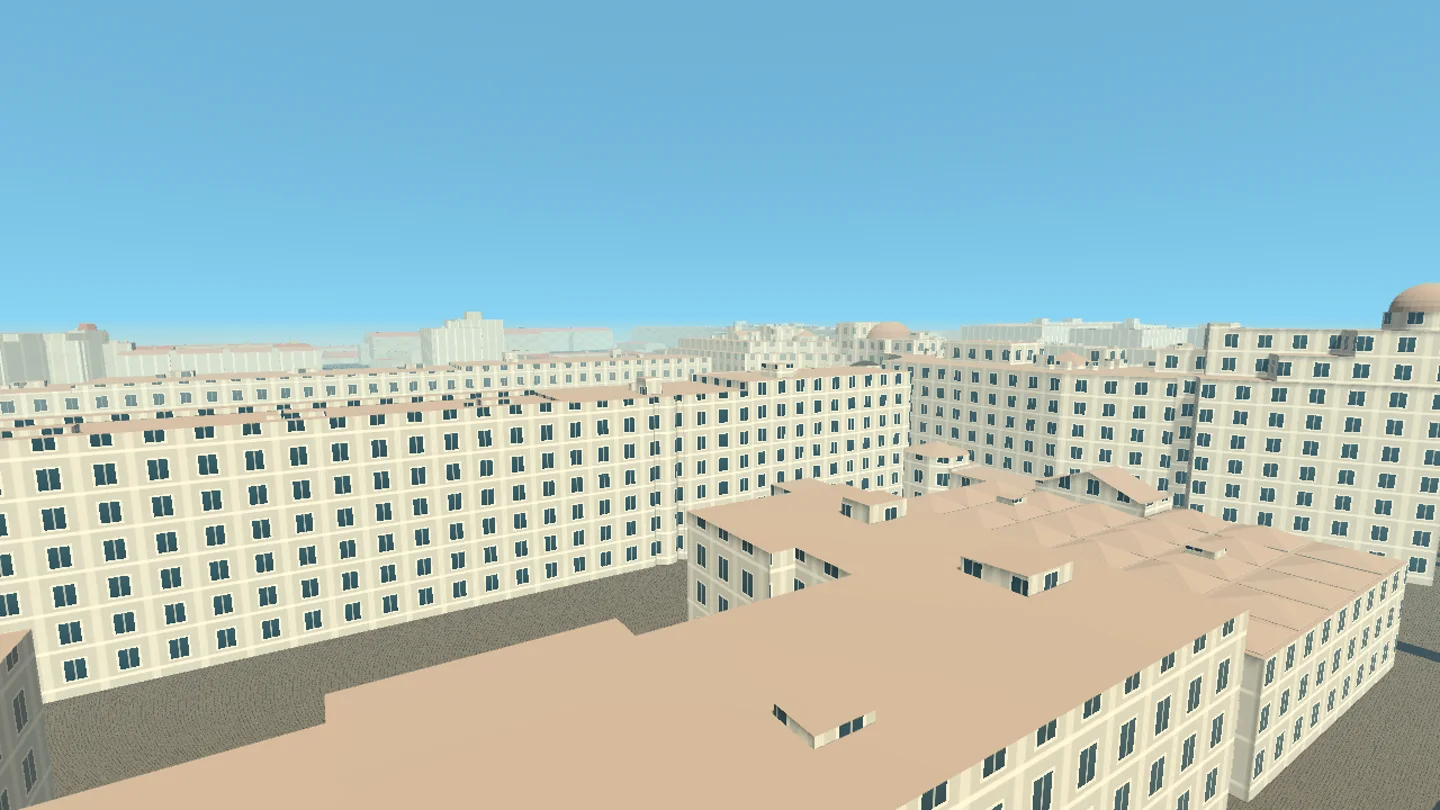
MONTPELLIER IN 3D · PROTOTYPE
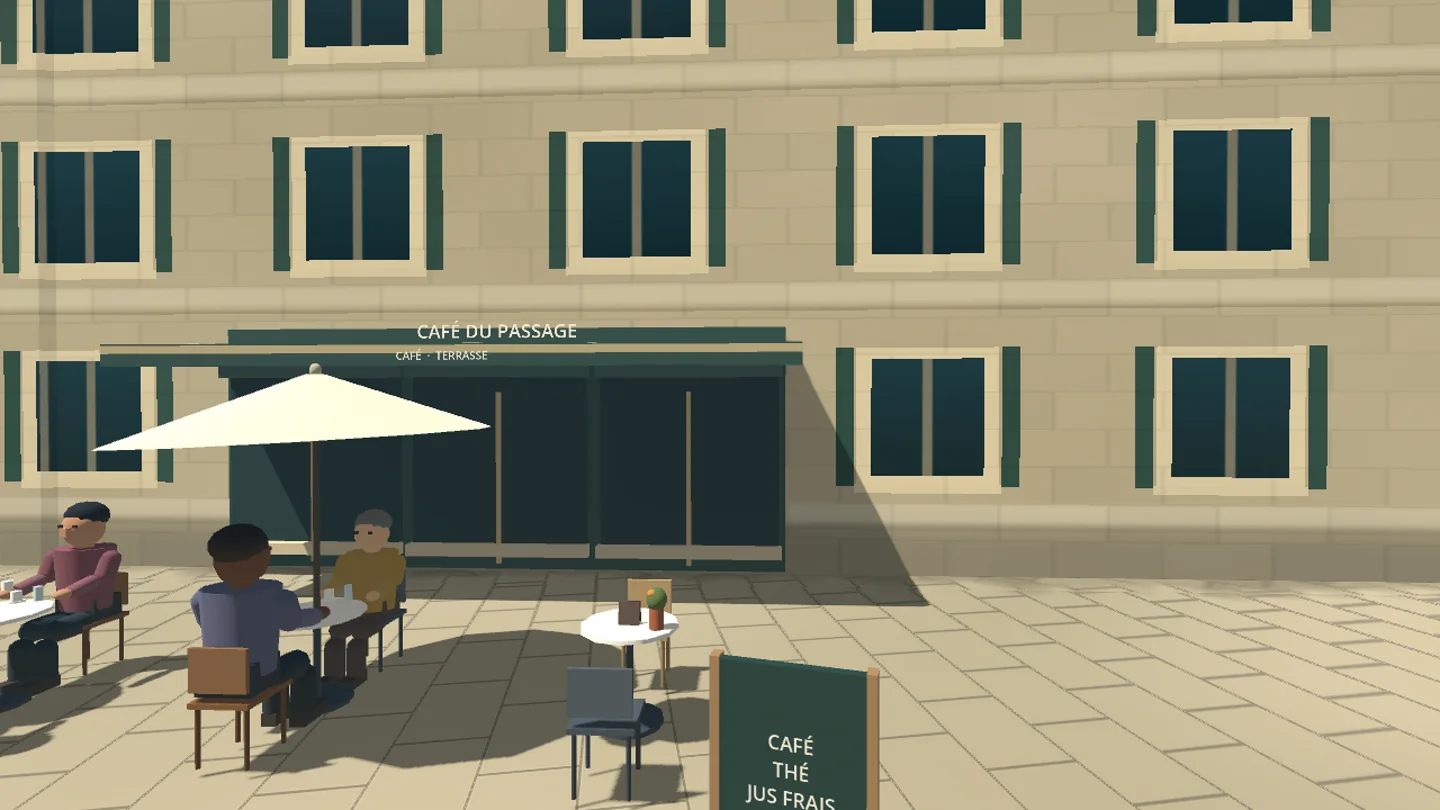
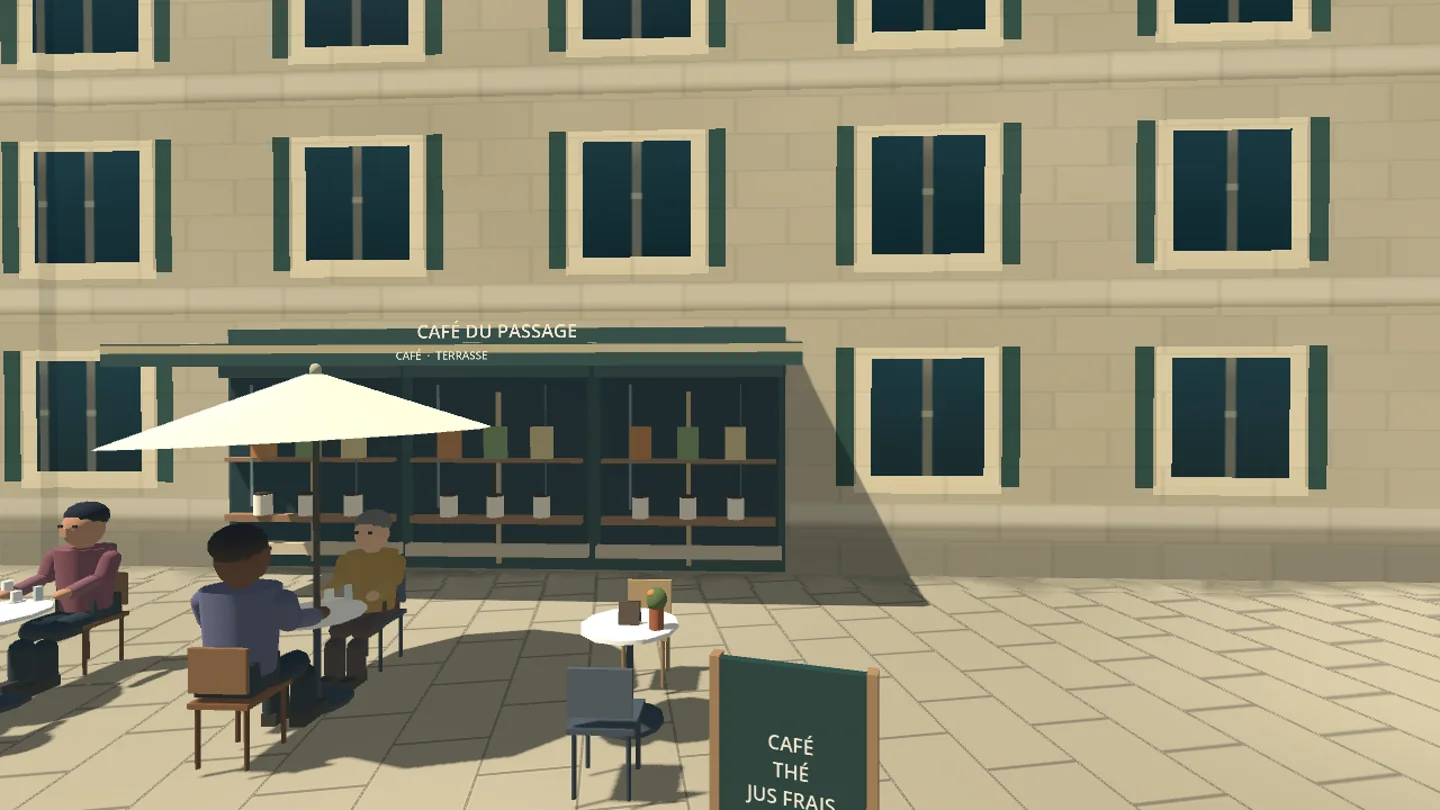
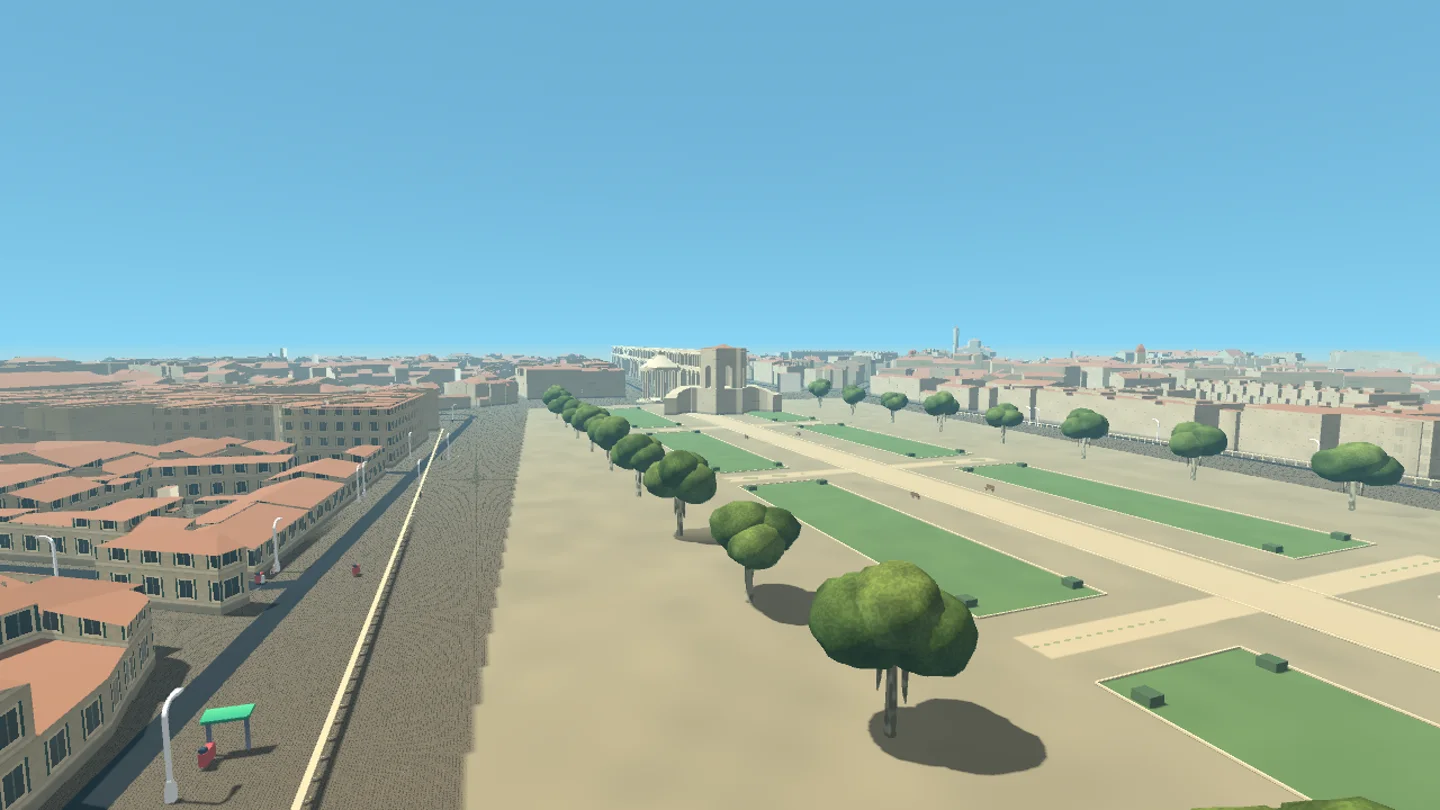
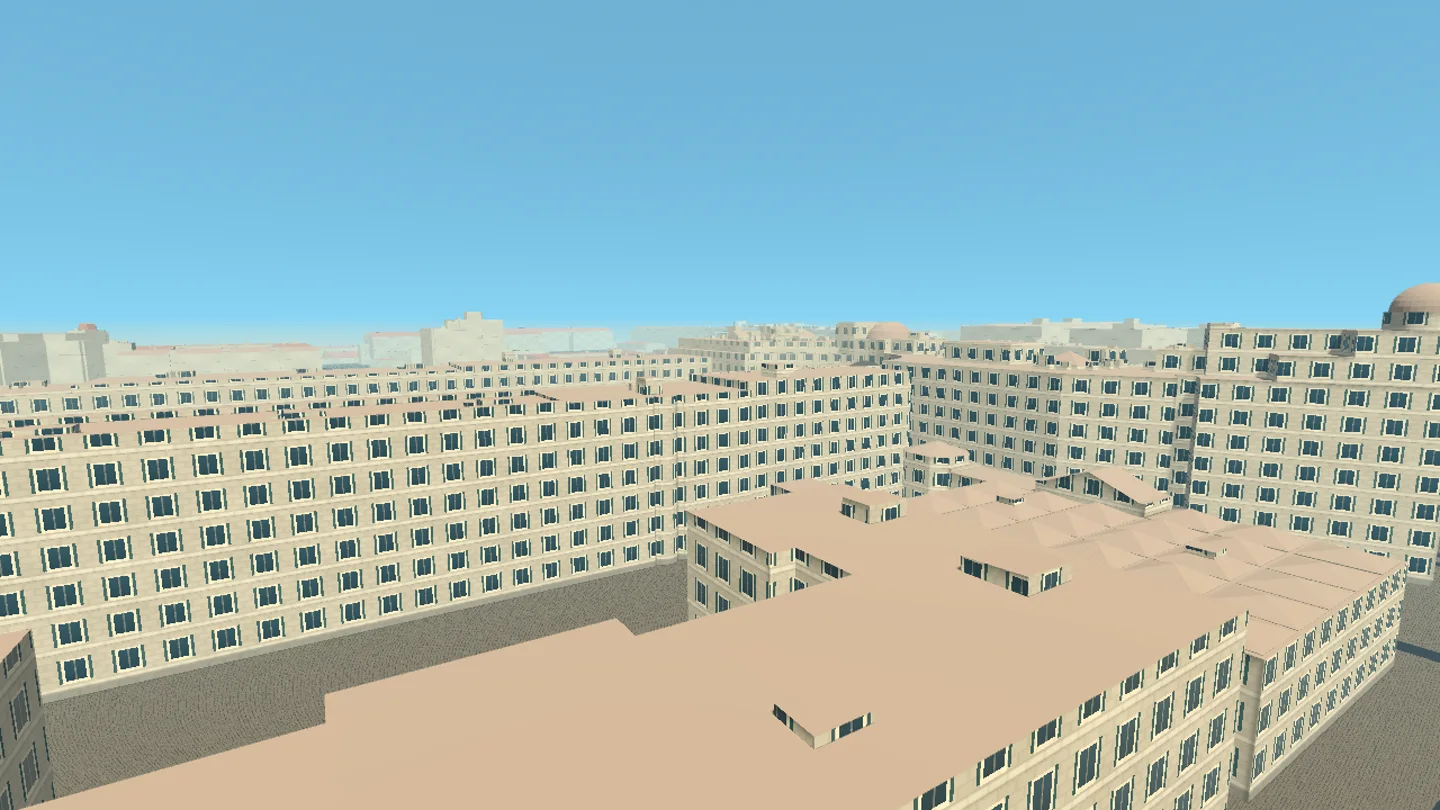
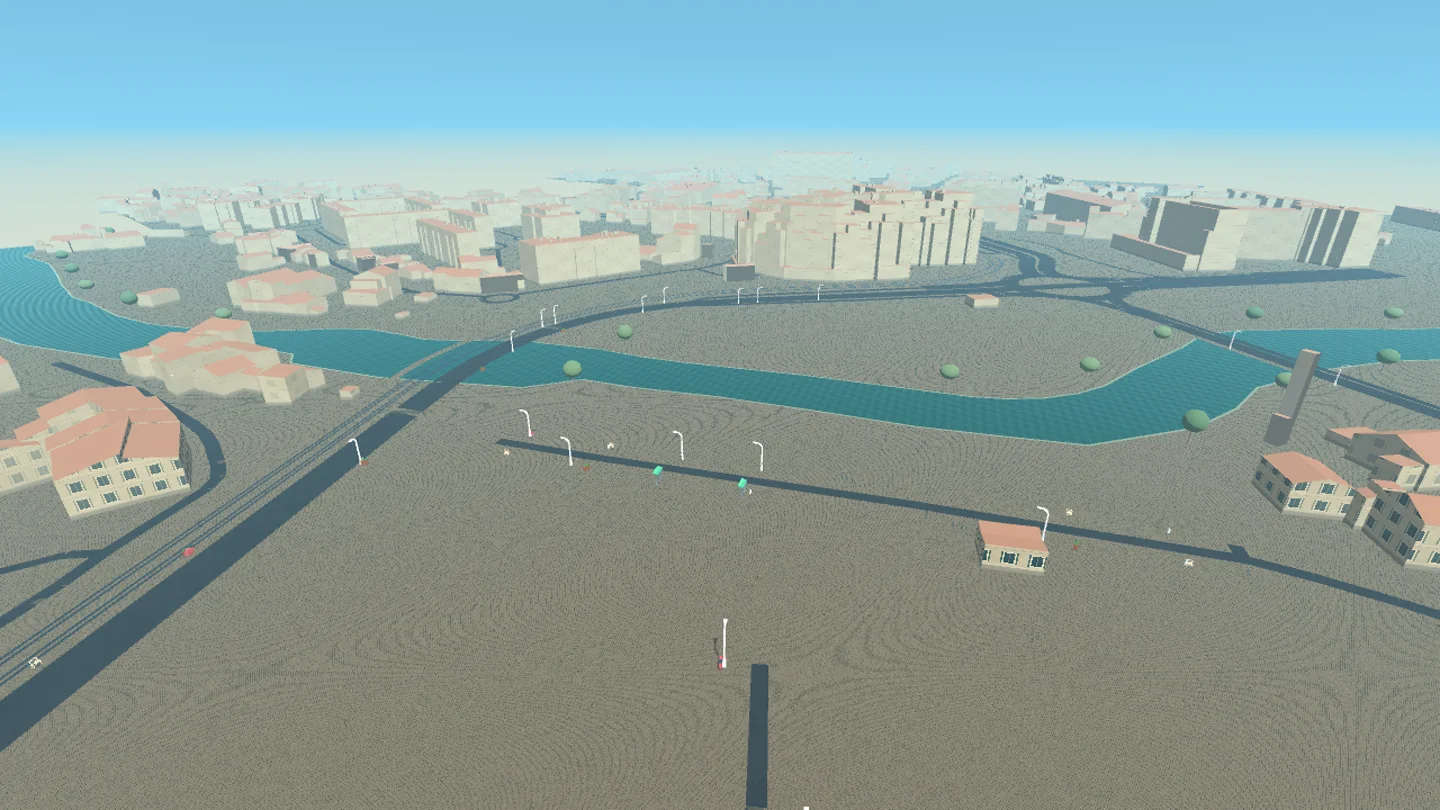
The latest pass improves five areas of the game: ground surfaces, shops, Peyrou, Antigone and the Lez. The comparisons use the same framing and lighting to make the changes clear.
The video shows movement and atmosphere in a working build. The screenshots below document more recent visual refinements.
Watch the compressed panoramic video too ↗Playback starts on request to reduce mobile loading.
Explore the game page →The stone has been lightened and distant paving softened. The shaders use coordinate derivatives to reduce fine details as the camera moves away, reducing pattern shimmer.
Shop windows have been furnished and windows enriched. Façade materials add local variation without rebuilding the map.
Bark colour variations and slightly irregular foliage volumes give the trees more variety while keeping their positions.
Pale façades, horizontal bands and pilasters locally replace generic shutters. The shader distinguishes the neoclassical style from that of the old city centre.
Vegetated strips follow the shore. Their geometry is clipped to avoid overlapping the water; ripples combine several scales to reduce regularity.
FROM PROTOTYPES TO DEVICES
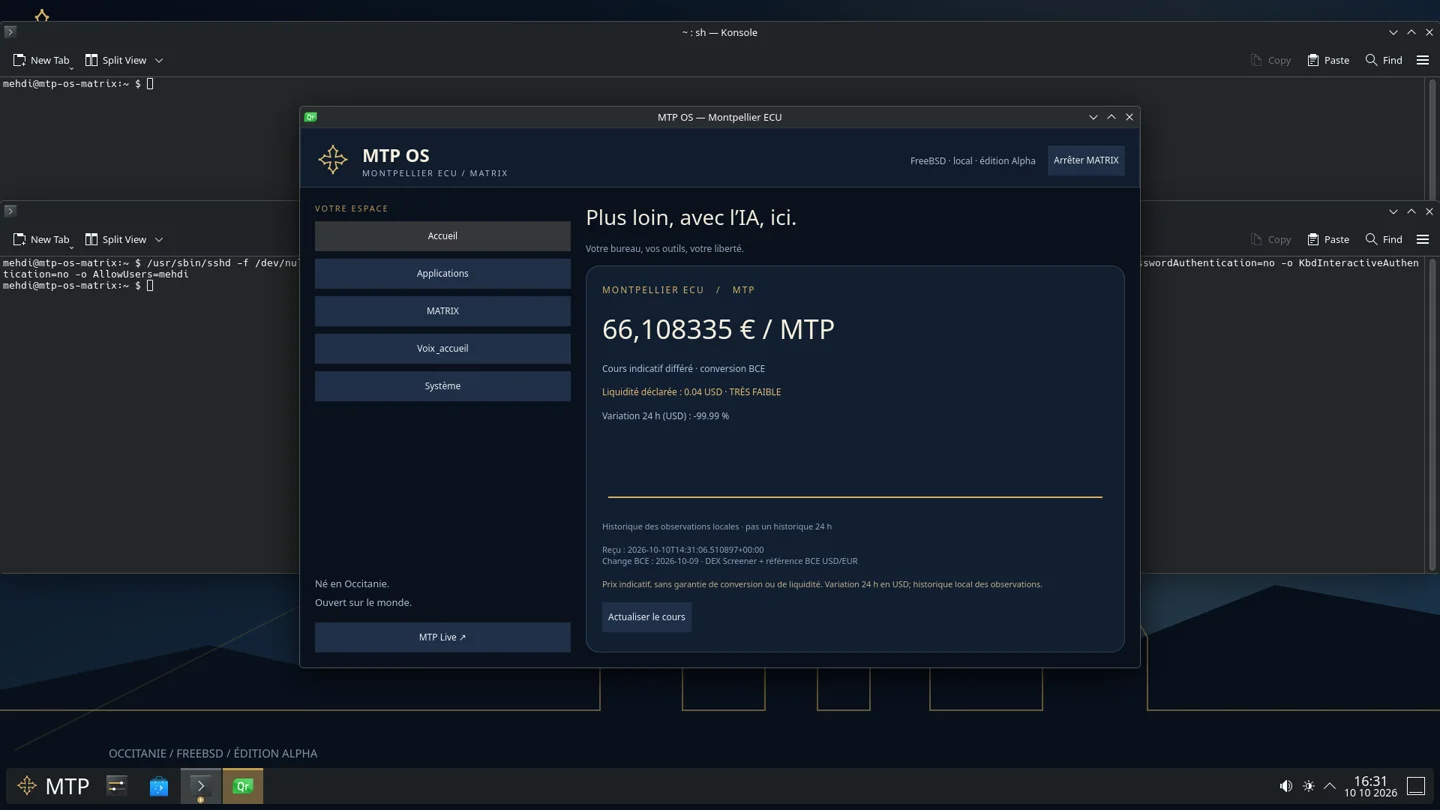
The Montpellier ECU centre starts in a FreeBSD virtual machine. The midnight-blue and gold desktop, MTP menu, local spoken welcome and market widget form an initial native integration.
The centre retains a dated cache when the network is disconnected. Programs are launched through a catalogue and a confirmation step. The 10 October report records 42 successful application tests under FreeBSD and a verified restart.
The splash transition still needs work. Speech recognition and generative conversation have not been validated. No public ISO has been produced.
WINDOWS PHONE / ARM32
PORT IN PROGRESSThe llama.cpp engine libraries have been compiled for ARM32/UWP. A UWP host and its package have been built on PC to prepare for running a small GGUF model.
The port adapts system access to UWP constraints: desktop-only Windows functions are disabled and model weights are read into RAM. This validates compilation, but not yet operation on the phone.
The next proof required: actual generation on Lumia, followed by memory and speed measurements. Engine installation and local inference are not confirmed at this stage.
AN ECOSYSTEM TAKING SHAPE
The Premium homepage brings the projects together, a dedicated page presents the game and a library links to 31 public resources. The classic experience remains available.
Pages have direct links and dedicated metadata. The homepage has been checked on desktop and mobile. Market information is hidden when price freshness or data quality cannot be verified.
Firebase email/password configuration is ready; website forms and sessions still need to be integrated before registration opens.
Work focuses on organising roles, choosing models and establishing cloud-service access conditions. Audits and offline checks prepare the next experiments.
Preparing access and quotas does not establish operational inference capacity. The latest reports consulted confirm no successful inference response. This remains experimental work, with no public cloud service promised.
The creations extend the Montpellier ECU universe: De l’écran à l’abandon, Le Comte, Wung Su and Hagakure. The website presents the introductions and previews available.
Mock-ups and previews must be distinguished from final editions. Corrections and editorial validation continue; catalogue payments remain disabled.
WHAT YOU CAN USE
View market sources and the assets of a public address. Prices depend on data freshness and liquidity.
Prepare a listing on this device, copy it and share it yourself. Automatic publication and payments are not enabled.
Explore content, experiments and published Windows releases of Monia. Availability depends on each project and version.
Read public documents, discover prototypes and contact the project to discuss your needs.
THE NEXT CHAPTER STARTS HERE
This journal presents the documented state as of 10 October 2026. Screenshots show working versions; future editions will follow new validations.
Talk with Montpellier ECU →